Verified > 99% Lab-grade Peptides Identity confirmation verifies the certain secretagogue being researched. Peptides like BPC-157 and TB-500 made use of for injury healing applications need to receive full verification. Identification verification is essential given that replacement with various compounds would fundamentally change the research method. The screening process includes specific steps to make sure exact results and proper sample handling. For these high-stakes situations, the price of testing is unimportant contrasted to prospective repercussions of using unproven items. For scientists adhering to methods from resources like the BPC-157 and TB-500 stacking guide, verified product high quality ensures the protocol receives a fair assessment.
What Is Hplc?
Any of these can produce biological effects that confound research study end results. As an examples of product-level context, compare the expected masses for Retatrutide, BPC-157, and Semaglutide. Each peptide has a various expected molecular weight, so mass confirmation is not a common badge; it is compound-specific proof. For a much deeper identity-focused description, see Mass Spectrometry Peptide Confirmation. Relying on the degree, several of these impurities can have a direct result on your application. For example, specific truncation sequences can hinder target-binding under investigation, or TFA can kill cells used in a bioassay. A 2016 survey published in Nature located that more than 70% of scientists had attempted and failed to reproduce one more researcher's experiments. While peptide purity isn't the only variable, making use of improperly identified reagents is an acknowledged contributor to irreproducible results. This is why respectable vendors supply both HPLC and MS data on their Certifications of Evaluation. As molecules leave the column, they go through a detector-- normally a UV detector set to 214 or 220 nm, wavelengths where the peptide bond takes in light highly. The detector documents how much UV light is taken in over time, generating a chart called a chromatogram. Purity is the percent of publications in the delivery that have every page published correctly, in the ideal order, with no missing chapters and no additional pages packed in.
Pinnacle Laboratory Content Team
Where can I send my peptides to examine for purity?
ACS Peptide Testing Labs is an expert peptide evaluation lab that approves samples from all 50 states. Whether you need to examine peptide pureness, confirm a distributor''s Certificate of Analysis, or run thorough pollutant screening, our laboratory offers fast, precise results with comprehensive reporting.
While not shills for "big pharma", we very value the large financial investment they make right into science, quality assurance, and quality assurance to decrease these dangers for pharmaceutical drug addict. A single HPLC method can not and will not identify and measure every little thing that remains in a mix in one pass; it simply does not function in this way. Actually, no qualitative or quantitative logical method (LC, MS, FTIR, NIR) can do what users view as the pureness outcome on certificates of analysis today. Yet bear in mind, these two tops do not represent all possible pollutants, excipents, or various other chemicals in the product. Product summaries and classifications do not suggest any kind of therapeutic results. Kai is the lab's AI research study aide-- powered by Claude (Anthropic) and GPT (OpenAI)-- in charge of technological PharmaLabGlobal muscle peptides writing, literature evaluation, COA confirmation, and substance evaluation. Together they produce the research study content released on this website. Detoxified by preparative RP-HPLC with quality control evaluation. This quality matches the majority of artificial insemination research applications-- receptor binding assays, enzyme task researches, and cell society experiments. Not every application demands 99% purity, and purification is a considerable part of peptide manufacturing cost.
For numerous customers, analytical documents is an essential element of distributor choice.Underdosed compounds create suboptimal outcomes that lead researchers to abandon effective procedures too soon.For a 10-residue peptide with 99.5% coupling performance, you would certainly anticipate about 95% of the final product to be the full-length series prior to filtration.The pureness portion comes from comparing the area of the main peak to the total location of all detected peaks.Oxidized versions may behave as partial agonists or antagonists.
What Is Peptide Purity Screening?
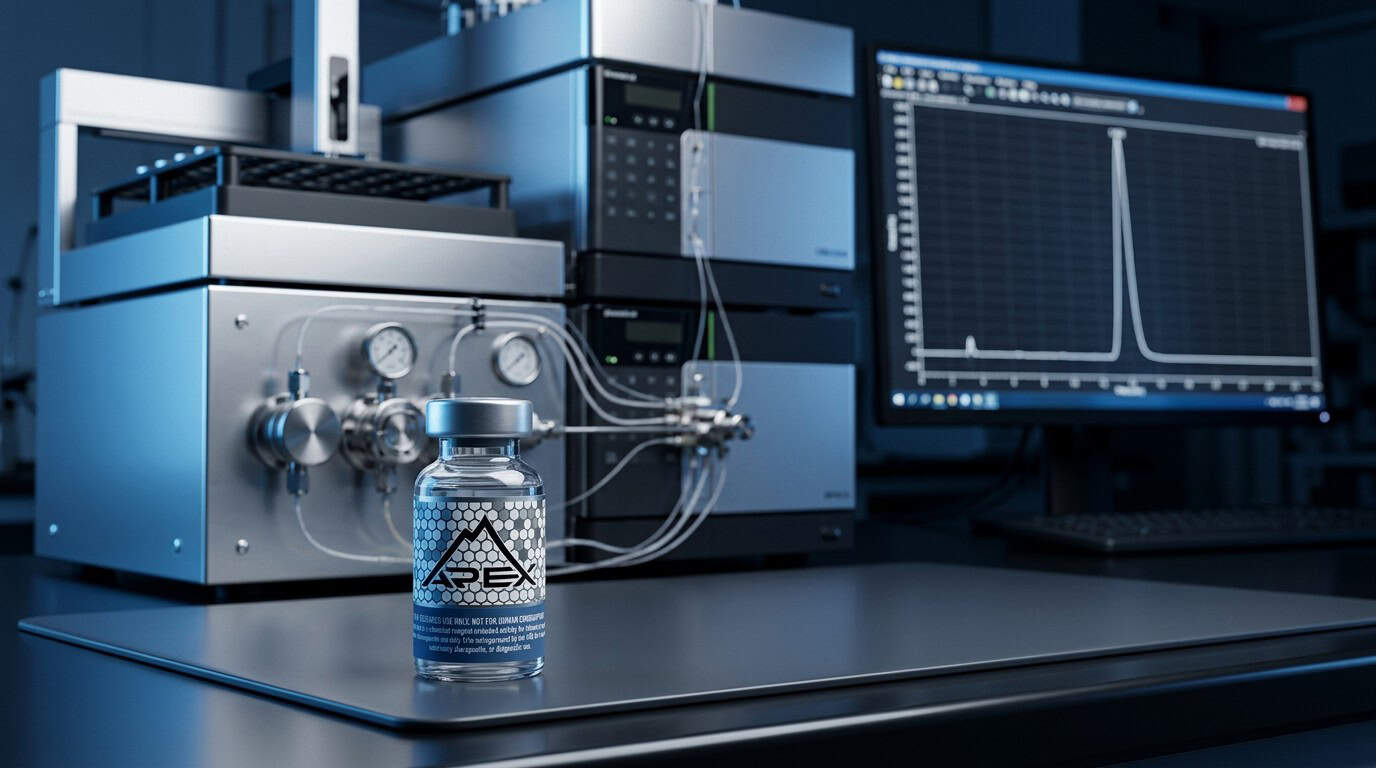
The real contents were a GHRP analog with potent cardiovascular results. COAs stay one of the most valuable devices offered when reviewing research peptide quality. Mass spectrometry examines molecular mass and can aid verify peptide identification. For several researchers, HPLC data serves as one of the main quality signs reviewed throughout supplier examination. Organizations buying wholesale study peptides often assess pureness documentation prior to putting bigger orders. As a matter of fact, a laboratory offering peptide screening have to supply data fulfilling the stringent logical expectations of agencies like FDA and EMA [4] By using a qualified third-party laboratory, peptide makers or scientists make certain an honest and skillfully recorded assessment of quality, which is precisely what inspectors seek. Furthermore, ongoing independent testing sustains conformity in batch launch and quality control. For scientists, getting confirmed peptides isn't just a formality-- it's the structure of trustworthy experiments and research study reproducibility. Examples undertake independent third-party laboratory confirmation. High-performance fluid chromatography (HPLC) validates ≥ 99.3% purity, while mass spectrometry (MS) confirms molecular identification and architectural precision. Trustworthy measurement methods are crucial for quality assurance. The lab gives HPLC purity analysis and mass spectrometry identification confirmation. A chromatogram shows heights standing for different substances found throughout HPLC analysis. The main peak, usually the largest, represents your target peptide.